
Over 100 Opposition members of Parliament led by Congress Chief Sonia Gandhi on Tuesday marched from Parliament to the Rashtrapati Bhawan

The changes in the ordinance have been made after taking inputs from states suggesting changes to the Act which would make it more industry-friendly

'Which one of us would give up our flats for development?' 'We insist that others, who are unwilling but weak, make all the sacrifices on our behalf and then we are puzzled when there is violence against the State,' says Aakar Patel.

Opposition party is unlikely to block Bills for GST, insurance and e-auction of coal mines.

As per the conditions set by General Motors, a dealer who does not accept its offer by July 15 would get only 50 per cent of the compensation amount being offered.
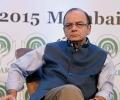
Union Finance Minister Arun Jaitley explains the future of the Land Acquisition Law in India

With clouds of storm hovering over Parliament's budget session, President Pranab Mukherjee on Monday sought the "cooperation" of all MPs in the smooth conduct of legislative business but gave no indication of plans to bring changes in the controversial land acquisition ordinance.

The contentious Land bill passed the Lok Sabha test after the government carried out nine amendments.

Lok Sabha is set to witness a confrontation over Land Acquisition Bill on Tuesday when it is taken up for voting with opposition bent on opposing it even as the government again offered to make changes in the legislation in the "larger interest" of the farming community.

'If I am angry, then I do not have the right to be in the Cabinet. Whatever I have done, I have ensured that farmers' interests are protected,' Rural Development Minister Chaudhary Birender Singh, who 'abstained' from a meeting with the President on the ordinance, tells Rashme Sehgal.

"The Election Commission, in my opinion, is theoretically correct. But, it is also true that the Election Commission had directed the administration to transfer officials with administrative duties and post them according to its direction at the time when it was in charge of the election. "If offences had occurred as a consequence of the polls, it was also the duty of the Election Commission at least to direct or advise the administration to register the complaints which it did not," Justice IP Mukerji observed.

India should engage the world on the basis of its confidence in its identity rather than trying to please the global community as their "pale imitation", External Affairs Minister S Jaishankar said on Wednesday amid increasing Western pressure on the country to oppose the Russian invasion of Ukraine.

The problem can be met, according to Shubhashis Gangopadhyay, research director of India Development Foundation, by the government tapping into its own land holdings.

Any such acquisition, if at all, should only be in exceptional cases

On the face of it, some clauses in the new land ordinance looks pro-farmer but in reality it is not so. The problem is two-fold. The first is the vagueness of the law itself. The other problem with this ordinance is that it is against the very ethos of judicial interpretation, says Vidhan Vyas.

In a major blow to the corporate sector, the Supreme Court on Wednesday quashed allocation of 214 out of 218 coal blocks which were allotted to various companies since 1993 and in which it was claimed that around Rs 2 lakh crores were invested.

Chian it was open to international efforts to identify the source of the deadly virus.

Apologising for the incident, the Indian Army also announced an Rs 10 lakh compensation to the family of those who were killed.

Private equity (PE) is set to play a bigger role in banks. Of 21 recommendations accepted by the Reserve Bank of India (RBI) out of 31 made by its Internal Working Group (IWG), its stance on non-promoter holdings in private banks is seen with excitement, though it doesn't refer to PEs explicitly. On non-promoter holdings in these banks, the RBI said this will be capped at 10 per cent of the paid-up voting equity share capital in the case "of natural persons and non-financial institutions and entities"; and "at 15 per cent for all categories of financial institutions, entities, supranational institutions, public sector undertaking, or the government." While this is a modification of the IWG's stance for the non-promoter holding in banks at up to 15 per cent, it does open up a huge window for PEs, all the same. This is because, while the RBI has remained silent on the eligibility of industrial houses for bank licences, fresh high-quality capital in large amounts can only come from PEs.

'This is happening regardless of the Budget.'

India should not miss the opportunity to develop high-speed railway.

Internal report, to be finalised in seven-10 days, may also suggest reduction in subsidies

Congress vice president Rahul Gandhi was back in action on Saturday after he met farmers over land bill in Delhi, a day before the party's big kisan rally.
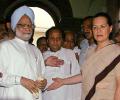
'While they were respectful of the PM, it was clear that as ministers, they owed their positions as much, if not more, to Mrs Gandhi.' 'When attacks were mounted on the PM, there was very little coordinated effort by the Congress, UPA ministers or other politicians to speak up in his favour and strongly defend him.' B K Chaturvedi, Cabinet Secretary during the early years of UPA1, reveals how the Manmohan Singh-Sonia Gandhi equation worked. A riveting excerpt from Chaturvedi's memoir, Challenges Of Governance: An Insider's View

'Demonstrating respect and compassion during exit meetings are important.' 'After all, how you treat people on their way out of the door does not go unnoticed by the rest of your organisation,' says Shyamal Majumdar.

The NITI Aayog will now assimilate the views of states and then present a report to the PM.

'Give time to the 2013 Act to work. I not only think that the 2013 law is workable, I believe that the 2013 law is a compromise, a balanced middle path and protects the interests of land owners and livelihood losers.'

With a term ending in January 2017, he has to move fast to tackle the tough tasks cut out for him, says M J Antony.

News of all that's transpired on and off the football field

Experts consider Sebi's takeover code in its present form to be on a par with any foreign code governing public mergers and acquisitions.

More punitive action was needed against the company and the management, say experts

The BJP would seem just the sort of party that would embrace Aadhaar. Every other page of its manifesto makes some reference to changing governance in this country. So why is there no discernible difference in the positions of the BJP-led government towards Aadhaar and the dysfunctional approach of Chidambaram under the United Progressive Alliance, asks Rahul Jacob.

The Bill comes at a time when prospective home buyers are avoiding under-construction projects, almost everywhere in the country, thereby drying up sources of interest-free funds for debt-ridden developer firms

The assumption that money drives performance is dated.

It has been said that by 2025, India could become among the top five economies in the world. If India does become a $5 trillion economy but gets all its rivers polluted, food chain poisoned and genetic pool depleted and biometric database of Indians sold or stolen at the behest of commercial czars, will it not be a pyrrhic economic victory, asks Gopal Krishna.

A start-up that just focuses on discounting for growth without a balancing effort towards product will soon find itself riding a tiger that's impossible to get off from.

At the Paris climate change summit, there is talk of restricting temperature rise to 1.5?C instead of 2?C, which has been negotiated so far. This would give India less space to grow by limiting carbon emissions further, reports Darryl D'Monte, reporting exclusively for Rediff.com from the French capital.

'The Constitution says the government, the council of ministers, shall be responsible to the House of the People which is the Lok Sabha, not to the Rajya Sabha.' 'Let us hope they will be able to show better floor and political management through a process of, if necessary, give and take.'

Upon implementation of the 7th Pay Commission the expected yearly burden on the central exchequer will be more than Rs 100,000 crore. Central government employees will get on an average a 24 per cent pay hike. Still, the unions aren't happy.

Experts hail Budget 2015 as a progressive, growth oriented one.
